Water extraction is the emergency front end of every water loss — getting the standing water out of the building as fast as possible, before it does more damage. It’s the single most time-sensitive step, and it’s distinct from the full restoration that follows: extraction is about speed and volume, drying and repair come after. We provide 24/7 emergency extraction for homes and businesses across Hattiesburg and the Pine Belt.
The First Step Is Getting the Water Out
When water is standing in a building, nothing else can start until it’s gone. That’s why extraction is the priority call: every hour the water stays, it migrates farther — under baseboards, into wall cavities, through subfloor into the framing below. Removing the bulk of the water quickly is what limits the eventual size of the job. Extraction alone doesn’t finish a water loss, but skipping straight past it, or doing it slowly, makes everything that follows bigger.
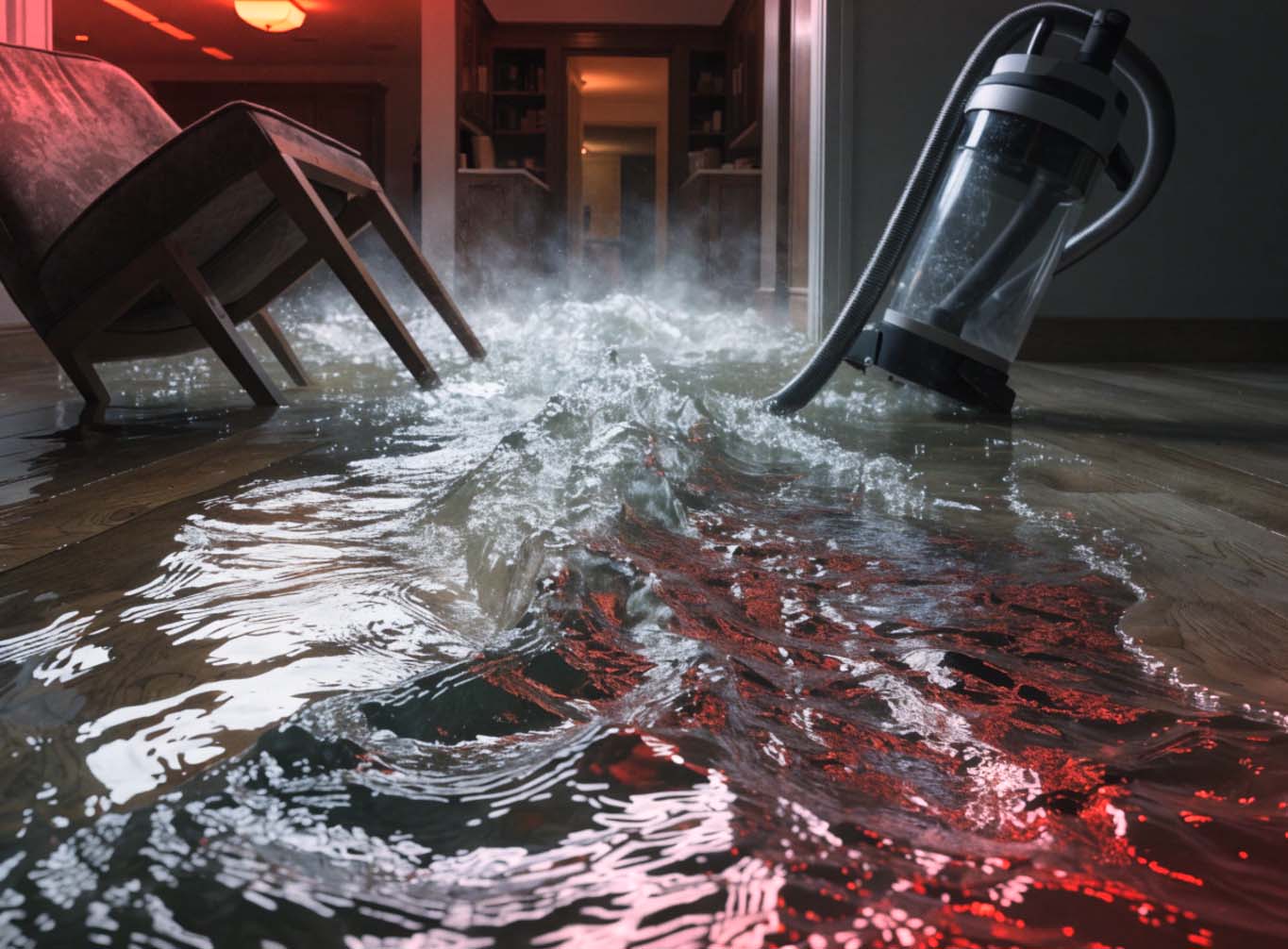
Every Hour the Water Sits, It Spreads
Standing water is not static. It follows gravity into the lowest, most hidden parts of a structure and wicks upward into porous materials by capillary action. The consequences compound quickly: swelling and delamination, staining, and — under EPA guidance — mold that can begin growing within 24–48 hours of exposure.[1] Fast extraction is the cheapest, simplest intervention available in a water loss, precisely because it happens before those secondary problems start.
How Extraction Actually Works
Extraction matches the equipment to the situation:
- Truck-mounted extractors move high volumes of water quickly — the workhorse for significant standing water.
- Portable extractors reach tight spaces, upper floors, and areas a truck-mounted unit can’t.
- Sub-surface extraction pulls water out of carpet, pad, and hard-floor assemblies rather than just off the surface.
The right approach also depends on the IICRC S500 water category — clean (Category 1), gray (Category 2), or contaminated black (Category 3) water each call for different handling, and Category 3 requires containment and safe disposal of what it touched.[2] Once the standing water is out, the loss moves into structural drying — see water damage restoration for the full recovery.
What Determines How Long Extraction Takes
Extraction is usually the fastest stage of a water loss, and its pace is set by physical realities, not a menu:
- How much water there is — a contained overflow versus inches across a whole floor.
- How far it spread and into which materials — surface water pulls faster than saturated carpet and subfloor.
- The water category — contaminated water adds containment and disposal steps.
- Access — stairs, tight rooms, and blocked areas slow the equipment down.
The extraction itself is quick; the drying that follows is what takes real time. Standing water in your home or business is a same-priority emergency — the faster it comes out, the less there is to fix. Call any time; a real person answers and gets a crew moving.
Sources
- EPA — A Brief Guide to Mold, Moisture and Your Home
- ANSI/IICRC S500 — Standard for Professional Water Damage Restoration
Frequently Asked Questions
It's the emergency first step of any water loss — removing standing water from the structure as fast as possible with truck-mounted or portable extraction equipment, before it soaks deeper into flooring, walls, and subfloor. Extraction is followed by structural drying and repair.
Because standing water keeps spreading and soaking in. The longer it sits, the more it wicks into porous materials, and under EPA guidance mold can begin growing within 24–48 hours. Fast extraction limits how much has to be removed and dried later.
No — it's the front end. Extraction gets the standing water out; full recovery continues with structural drying to a documented standard, cleaning, and any repairs. Pumping out water without drying the structure leaves hidden moisture behind.
Yes. The IICRC S500 water category matters: clean (Category 1) water is handled differently than gray (Category 2) or contaminated black (Category 3) water, which requires containment, protective equipment, and safe disposal of what it soaked.
The physical extraction of standing water is usually the fastest part of a water loss — driven by how much water there is and how far it spread, not a fixed clock. The longer stretch is the structural drying that follows.